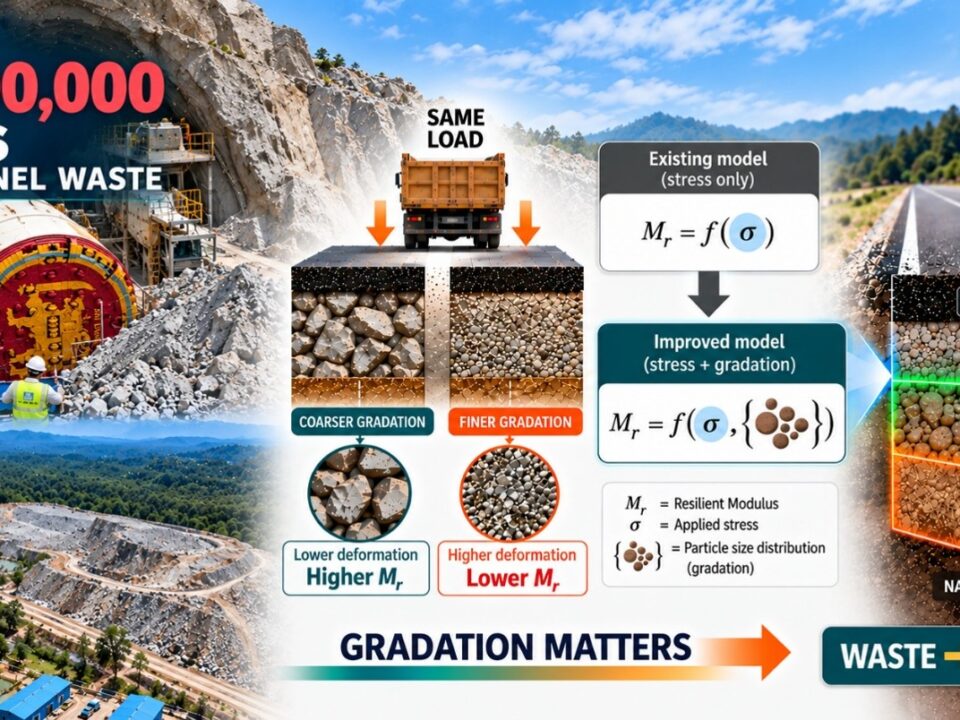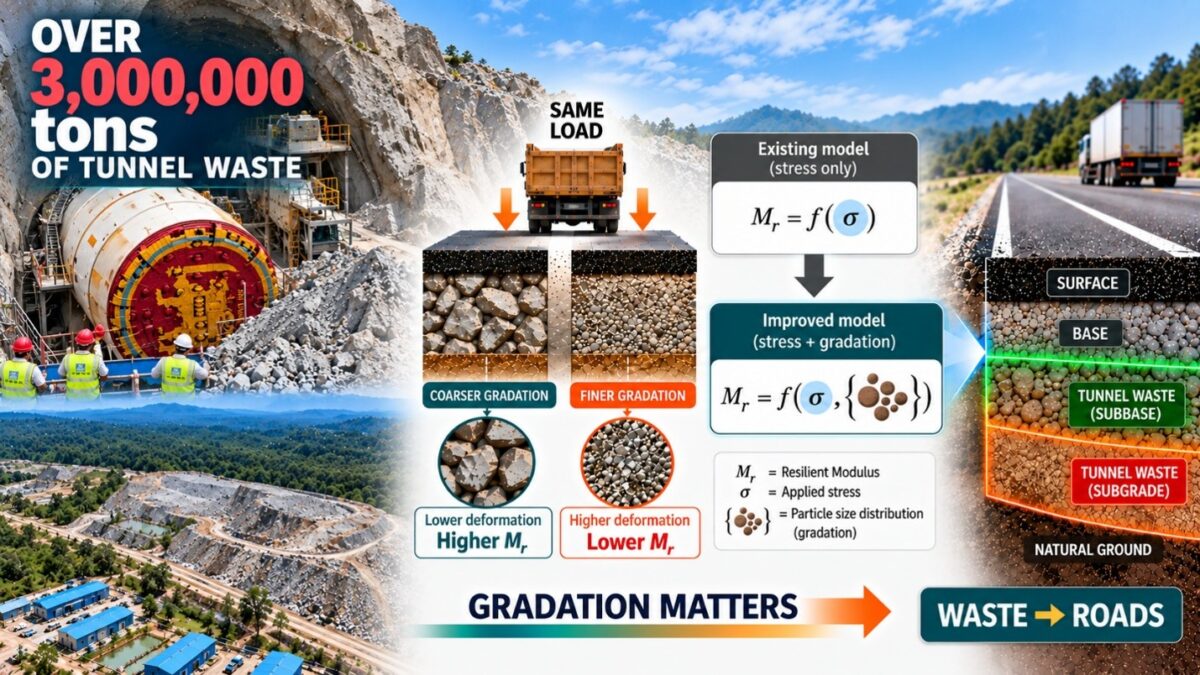

Effect of Particle Size Distribution on the Resilient Modulus of Tunnelling Rock Waste for Pavement Applications
November 8, 2026
Prof. L. I. N. de Silva Participates as a Resource Person at SLGS Annual Conference 2026
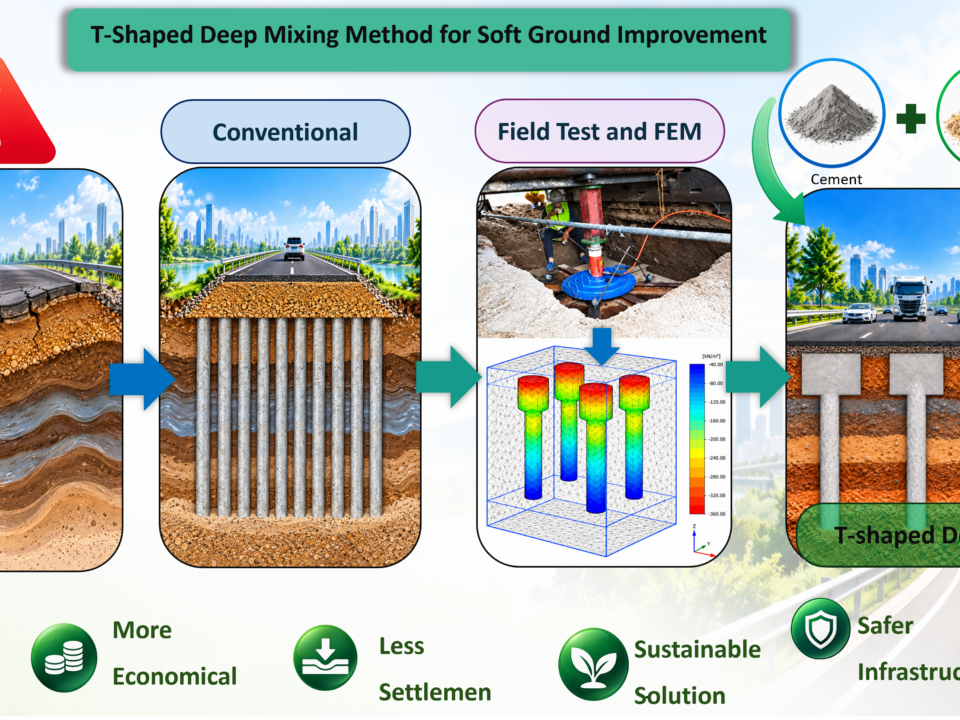
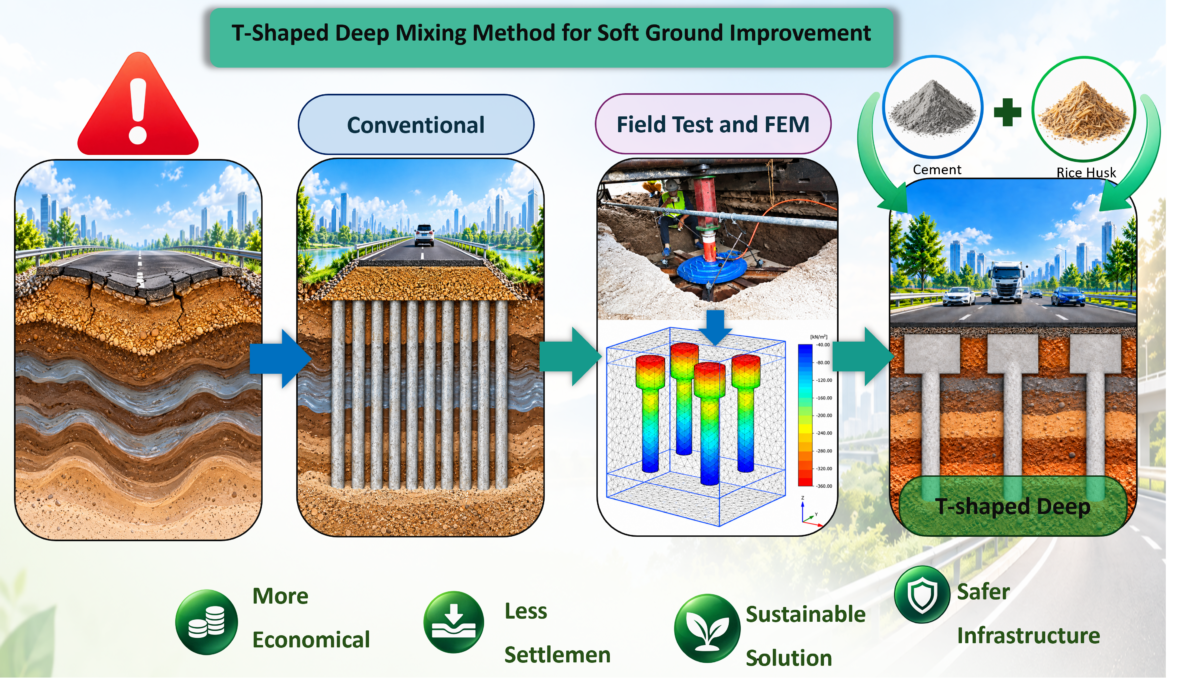
November 8, 2026Peat soils present significant challenges for infrastructure development owing to their high compressibility, low shear strength, high water content, and long-term settlement. This study quantifies the performance of cement–Rice Husk Ash (RHA) stabilised Deep Soil Mixing (DSM) columns for peat improvement using laboratory testing and finite-element analysis. Laboratory-scale tests were conducted on untreated and DSM-treated peat, and a three-dimensional Finite Element Model (FEM) was developed and validated against the measured settlement–time response. The validated model was then extended to the field scale using dimensional analysis and similitude based on Buckingham’s Π theorem. For single-gravity upscaling, geometric, load, and time relations were scaled consistently by relating the 50 mm laboratory column diameter to a representative 600 mm field DSM column diameter, giving a scale factor of 12. A parametric study was conducted for column diameters of 450, 600, and 800 mm under surcharge loads of 30, 54, and 78 kPa. DSM treatment markedly reduced settlement relative to untreated peat. The FEM reproduced laboratory behaviour with an average settlement error of about 6%, while the upscaled prototype predictions showed errors of 0.67%–3.43%. Stress Concentration Ratio remained above unity throughout the treated depth, confirming effective load transfer to the DSM columns.